Freshly Baked Cheese Straws

24 Feb

What can be better than waking to the smell of freshly baked cheese straws.
href=”https://simons-sauces.com/wp-content/uploads/2013/02/20130224-113217.jpg”>20130224-113217.jpg
My delicious cheese straws can be cooked to order with what ever cheese you want , Parmesan , cheddar, an old style Edam , the combinations are endless .

20130224-113847.jpg
Per order there is a minimum of 10 cheese straws
For more info and pricing email or phone:
simon.bingham@simons-sauces.com
0642297107

20130224-114245.jpg

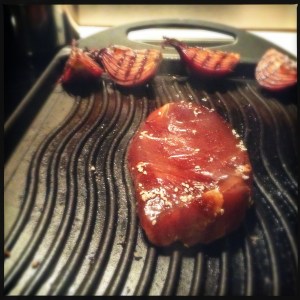
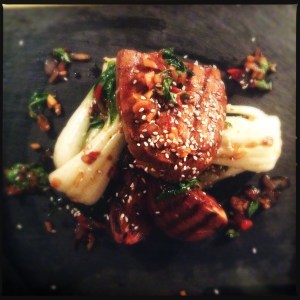
Soy and Lime marinated Chargrilled Tuna with a Spicy Bok Choi Stir fry

11 Feb

Soy and Lime marinated Chargrilled Tuna with a Spicy Bok Choi Stir fry15759938-chinese-zodiac-sign-year-of-the-snake-2013

To celebrate Chinese new year the year of the snake  , I have a delicious quick and easy recipe to share


Ingredients, Serves 2-4

Afbeelding 001

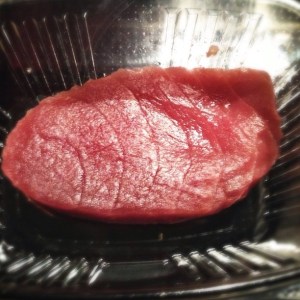
4 tuna steaks 1.5/2cm thick

Afbeelding 003

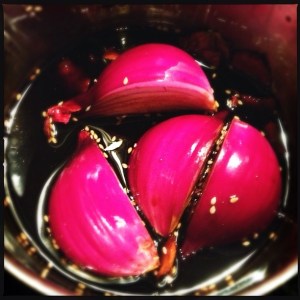
2 red onions quartered

1 tbsp soy sauce

1 tbsp water

1 lime, juice only

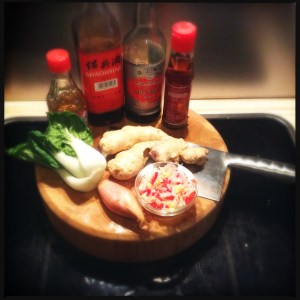
1 tsp fresh root ginger, peeled, finely diced

2 garlic cloves, finely chopped

1 knob ginger, finely grated

1 red chilli, de-seeded and finely chopped

150-200g/5-7oz baby bok choi leaves, washed and halved

1 tbsp shaoxing rice wine or water

1 tbsp low sodium light soy sauce

1 tbsp toasted sesame oil

1 tbsp black rice vinegar or clear rice

Method

1.For the soy and lime marinade, combine all the dressing ingredients in a small pan and gently heat through. Set to one side until cooled down.

2. once marinade has cooled pour half over the tuna steaks and the rest over the onions , leave for one hour to marinate.

Afbeelding 004

3. heat a lightly oiled grill pan over a medium to high heat  and begin first with the onions , grilling on each side until caramelized, set to one side , now for the tuna , grill  the tuna steaks for 1 minute each side for rare, 2 for medium, basting constantly with the marinade, until charred .

Afbeelding 005Afbeelding 009Afbeelding 010


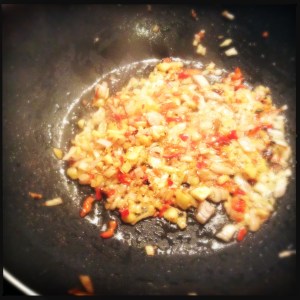
4.For the bok choi stir fry, heat a wok until hot, then add the garlic, ginger and chilli and stir fry for one minute.


Afbeelding 011


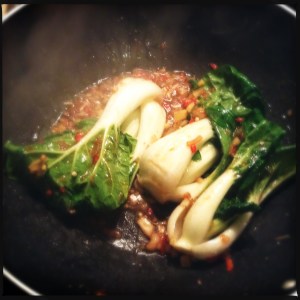
5.Add the bok choi and stir fry for another minute then add the remaining ingredients and stir fry for 1-2 minutes until the bok choi has just wilted and is hot.

Afbeelding 012


6.To serve, place the bok choi on a serving plate with the onions and place the tuna steak on top, then spoon pan juices over the dish garnish with the sliced spring onions.

Afbeelding 014

For more info mail or phone : simon.bingham@simons-sauces.com 0031642297107


For more info mail or phone : simon.bingham@simons-sauces.com 0031642297107

Afbeelding 015

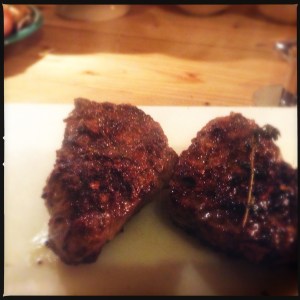
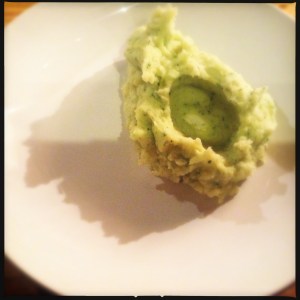
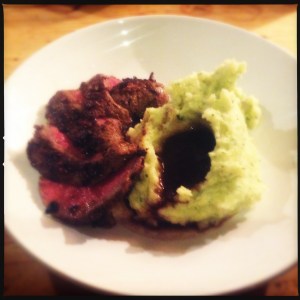
Recipe of the Day: Porcini Crusted Fillet Steak with Parsley Garlic mash and a Red Wine Reduction.

20 Jan

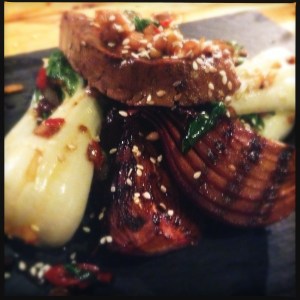
 Porcini Crusted Fillet Steak with Parsley Garlic mash and a Red Wine Reduction.

Afbeelding 036

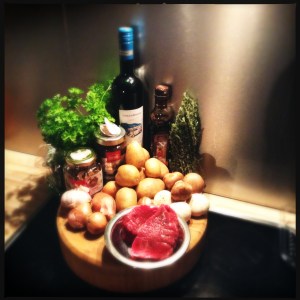
Ingredients:

Afbeelding 001

For the Parsley Mash

50g fresh curly parsley

1 garlic clove, lightly crushed

 900 g Desirée or King Edward potatoes

 150 ml milk

 Salt and freshly milled black pepper

1. Use a potato peeler to pare off the potato skins as thinly as possible, then cut the potatoes into even-sized chunks –. Put the potato chunks into a large pan of boiling water, sprinkle 1 level dessertspoon of salt all over them, put a lid on and cook the potatoes until they are absolutely tender – they should take 20-25 minutes. The way to tell whether they are ready is to pierce them with a skewer in the thickest part: they should not be hard in the centre, and you need to be careful here, because if they are slightly underdone you do get lumps.

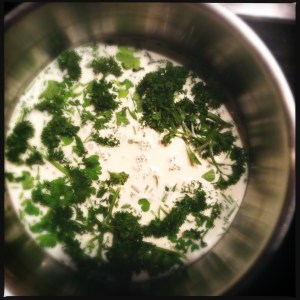
2. While the potatoes are cooking, place the parsley, with its stalks, into a small saucepan, add the milk and bring very slowly up to the gentlest simmer possible for 5 minutes or until the parsley is wilted and tenderAfbeelding 012

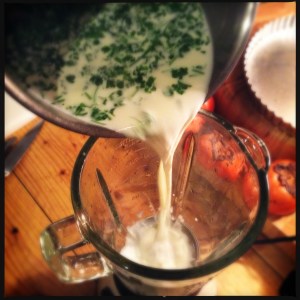
3.  place the whole lot into a liquidizer or processor and blend on a high speed until the parsley is blended into the milk and has turned it a bright green colour – 2-3 minutes – then strain it through a sieve to remove any bits of stalks and return to the pan to keep warmAfbeelding 018

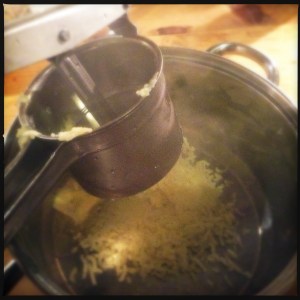
4. When the potatoes are tender, drain off the water, return them to the saucepan and cover with a clean tea cloth for 4 minutes. Then, using a potato ricer or old fashioned masher mash the potatoes

Afbeelding 022

5. gradually add the parsley milk and a good seasoning of salt and freshly milled black pepper. Mash until the mash is light and fluffy. Keep warm until serving .


Afbeelding 023

For the Red Wine Reduction

250g shallots, sliced

4 tbsp olive oil

1 garlic clove, lightly crushed

Sprig thyme

sprig rosemary

5 tbsp balsamic vinegar

400ml red wine

400ml beef stock or brown chicken stock, preferably homemade

knob of butter 

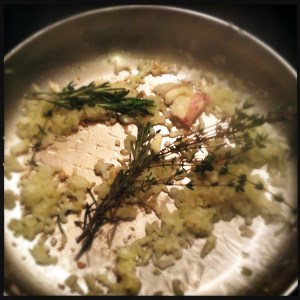
1.Sauté the shallots in a medium saucepan with the oil over a high heat for about 3 mins until lightly browned, stirring often. Season with ground black pepper and add the garlic and rosemary. Continue cooking for a further 3 mins, stirring often to prevent the shallots burning.

Afbeelding 013

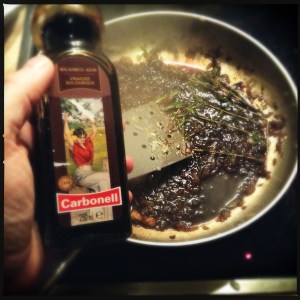
2.Pour in the vinegar and cook until evaporated away to a syrup.Afbeelding 015

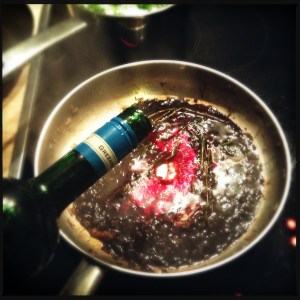
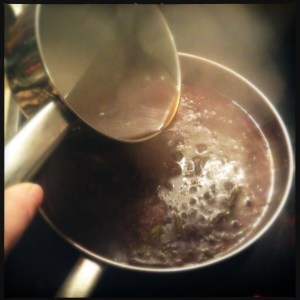
3. pour in the wine and cook until reduced by two thirds.Afbeelding 017

4.Pour in the stock and bring to the boil. Turn down the heat and simmer until reduced by two-thirds again, to around 250ml. Remove the garlic and rosemary. Add a little salt to taste and finally ‘monte’ (whisk) in a knob of butter. Add any juices from the steaks just before serving.

Afbeelding 021

For Porcini Crusted Fillet Steak

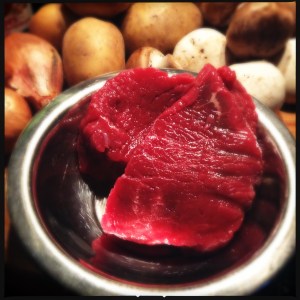
6 beef tenderloin steaks cut to 1 1/4″ thickness (32mm)

2 tablespoons dried porcini mushrooms (30 ml)

1 tablespoon olive oil (15ml)

25g butter

1 garlic clove, skin-on and crushed

1 sprig of thyme

 Salt and pepper to taste

1. Take the steaks out of the fridge 2 hours before you’re planning to cook, and allow them to come to room temperature.

Afbeelding 003


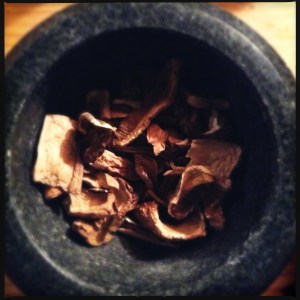
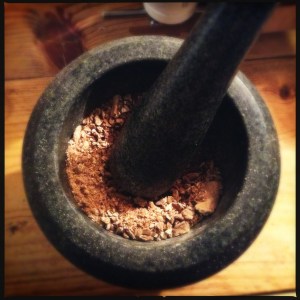
2. Using a coffee grinder dedicated to spices (or mortar and pestle) grind porcini mushrooms to a fine powder.

Afbeelding 005


Afbeelding 006

3. Pat the steak dry with a paper towel. Season both sides of the beef with salt and pepper. Sprinkle each side of the tenderloin with the porcini dust.


Afbeelding 024

4. Heat a heavy-based griddle pan or frying pan over a medium-high heat. Place steak into the pan. Cook for 90 seconds on each side, pressing down with a spatula, until both sides are well browned.

5. Add the butter, garlic and thyme to the pan and, when melted, use them to baste the steak, turning it every minute until it’s done to your liking: a 4cm steak should take about 6 minutes for medium-rare, but always do it by eye.

Afbeelding 025

6. Take out of the pan and leave somewhere warm to rest for 5–10 minutes, then serve.

Afbeelding 027

And finally to plate up.


Afbeelding 031


Afbeelding 035

As an addition to the dish I added some sautéed mushrooms.

Afbeelding 041


If interested I can always come and cook this for you

For more info mail or call: simon.bingham@simons-sauces.com 0642297107


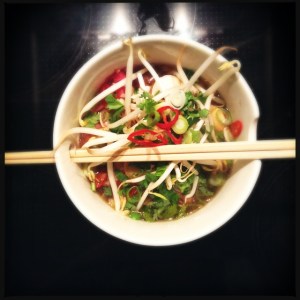
Pho Bo Beef: recipe of the day

13 Jan

Pho Bo Beef: recipe of the day.

Afbeelding 025

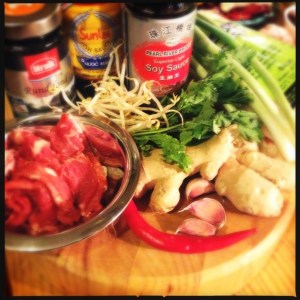
Pho is a Vietnamese dish consisting of broth, noodles made from rice, a few herbs, and meat; It’s a popular street dish.

My quick and easy Vietnamese classic noodle dish can be knocked up in a matter of minutes.

Serves 4

Afbeelding 001

Ingredients.

2 liters rich beef stock.

1 tbsp fresh ginger finely sliced.

I garlic clove thinly sliced.

250gr dried flat rice noodles.

400gr fillet or rump steak thinly sliced into strips.

Afbeelding 013

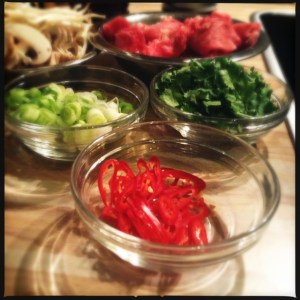
4 spring onions, thinly sliced .

Afbeelding 017

A handful of mushrooms thinly sliced.

Afbeelding 014

125gr beansprouts

2 tbsp fish sauce.

3 tbsp chopped coriander, stalks and roots saved for the stock.

Chopped red chilies, you decide how hot you want it.

Soy sauce , to serve.

Afbeelding 011

Preparation

Afbeelding 007

1: Heat stock with the ginger, garlic and coriander roots/stalks until boiling,  remove from heat and leave to infuse.

Afbeelding 019

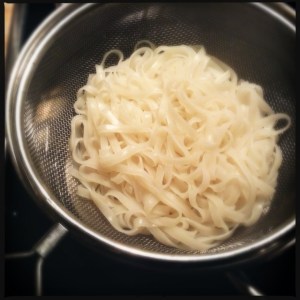
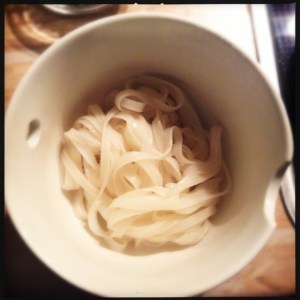
2:Cook noodles in boiling water for ¾ minutes until just tender, drain and divide between 4 bowls.

Afbeelding 022Afbeelding 023

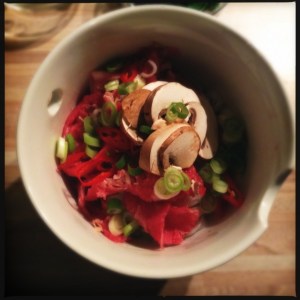
3: top with the sliced beef , spring onions and mushrooms , then strain over the boiling stock.

Afbeelding 028

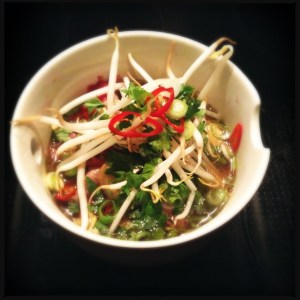
4: Stir in the beansprouts, fish sauce and coriander.

Afbeelding 030

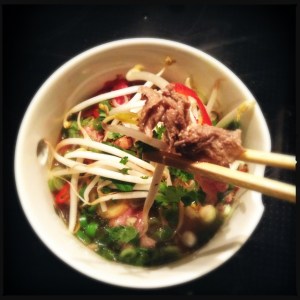
5: Serve the noodle soup immediately, with chilies and soy sauce to taste.

6: enjoy.

For more info mail or call: simon.bingham@hotmail.com 0642297107

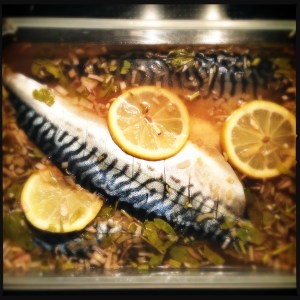
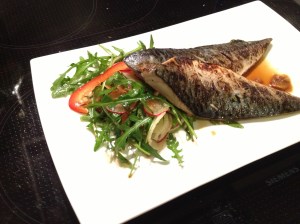
Mackerel cooked with a Blowtorch Served with a Fennel Salad and Soy & Lime Dressing

9 Jan

If still not sure about cooking this recipe but want to try, how about me coming to cook it for you.

Mackerel cooked with a Blowtorch Served with a Fennel Salad and Soy & Lime Dressing

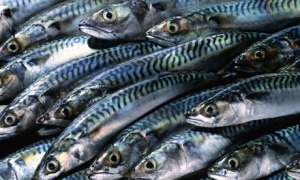
Mackerel one if my favorite fish to eat, a nutritious oily fish packed full of vitamins and omega and totally underrated, a sustainable fish that we should eat more often.

MAckerelMany4

Atlantic mackerel is often used in sashimi. Spanish mackerel has only a small percentage of red meat and a milder taste than other kinds of mackerel. King mackerel has a firm texture and distinct taste. Cero mackerel, caught in waters along the coast of Florida, has leaner flesh and more delicate flavor than most varieties. Pacific mackerel is an oily fish with an assertive flavor. Pacific jack mackerel (also called horse mackerel) is often tinned. Wahoo), is a subtropical fish with a delicate flavor; it is often used for sashimi.

Atlantic mackerel is often used in sashimi. Spanish mackerel has only a small percentage of red meat and a milder taste than other kinds of mackerel. King mackerel has a firm texture and distinct taste. Cero mackerel, caught in waters along the coast of Florida, has leaner flesh and more delicate flavor than most varieties. Pacific mackerel is an oily fish with an assertive flavor. Pacific jack mackerel (also called horse mackerel) is often tinned. Wahoo), is a subtropical fish with a delicate flavor; it is often used for sashimi.

Ingredients

Less than 30 mins Preparation time

30 mins to 1 hour Cooking time

Serves 4

For the mackerelAfbeelding 012

250ml/9fl oz cider vinegar, or white wine vinegar

250ml/9fl oz water

A handful of roughly chopped flat leaf parsley

40g/1½oz caster sugar

2 shallot’s thinly slice

½ tsp peppercorns

3-4 lemon slices

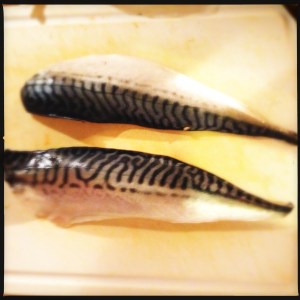
2 whole mackerel, filleted, pin bones removed

1 tbsp rapeseed oil


For the soy and lime dressing

1 tbsp soy sauce

1 tbsp water

1 lime, juice only

1 tsp fresh root ginger, peeled, finely diced

½ tsp dark muscovado sugar

For the fennel salad

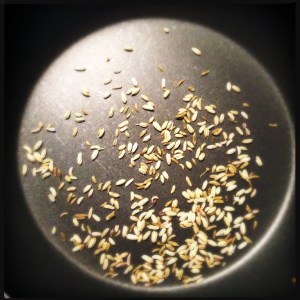
Afbeelding 0141 tsp fennel seeds, soaked in water for 2 hours, drained and toasted in a dry pan

1 fennel bulb, finely sliced on a mandoline, slices soaked in ice-cold water for 20 minutes, drained

Half a red pepper finely sliced on a mandolin

A hand full of radish finely sliced on a mandoline

1 tbsp olive oil

½ lime, juice only

1 bunch rocket leaves

2 pinches sea salt

1 pinch smoked Spanish pepper or cayenne pepper if the smoked pepper is unavailable

Preparation method

Afbeelding 001

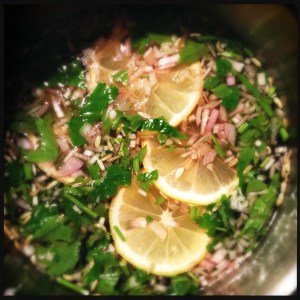
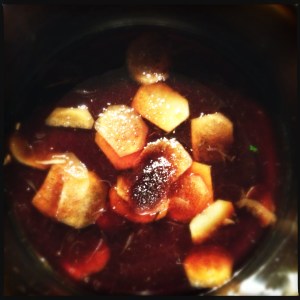
1. For the mackerel, heat the cider vinegar, water, parsley, caster sugar, shallot’s, peppercorns and lemon slices in a medium saucepan over a medium heat. Heat the mixture until just warm then remove from the heat. Transfer the contents of the pan to a flat, shallow container and set aside to cool.

Afbeelding 013

2. When the mixture has cooled, place the mackerel fillets into the container, flesh-side down. Set aside to marinate for 20 minutes

Afbeelding 002

.3. For the soy and lime dressing, combine all the dressing ingredients in a small pan and gently heat through until the sugar has dissolved. Set to one side.

4. Preheat the grill to its highest setting

5. When the mackerel fillets have marinated, remove them from the marinade and pat dry with kitchen paper. Make several diagonal scores in the skin, going across the length of each fillet to stop them from curling up during cooking.

Afbeelding 015

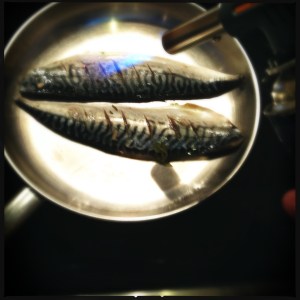
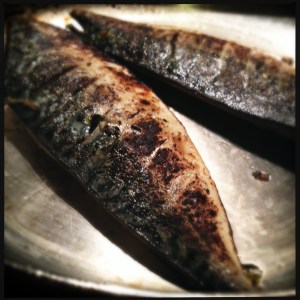
6. Brush a baking tray all over with oil. Arrange the mackerel fillets onto the greased tray, skin-sides facing upwards. Place under the grill and cook for 4-5 minutes, or until the skin is crisp and the flesh is cooked through. Or alternatively I like to use a blowtorch  I know it sounds extreme but cooking the mackerel with a blow-torch gives a lovely charred flavor without overcooking the flesh. Drizzle the mackerel with rapeseed oil, gently blow torch on both sides until cooked through then season with salt and freshly ground black pepper.

Afbeelding 022

 Afbeelding 025

7. for the salad, combined. all the salad ingredients in a large bowl.

 Afbeelding 026

8. To serve, divide the fennel salad equally among four serving plates. Place a grilled mackerel fillet on top of each portion. Spoon the salad dressing around the edge of the plate. Scatter over the remaining toasted fennel seeds.

Afbeelding 032

For more info Mail or Call: simon.bingham@simons-sauces.com 0642297107

Afbeelding 044

If still not sure about cooking this recipe but want to try, how about me coming to cook it for you.

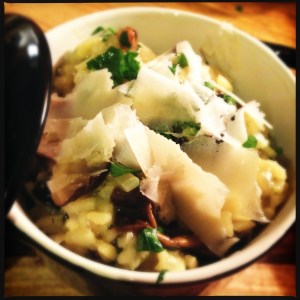
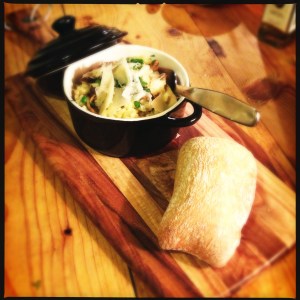
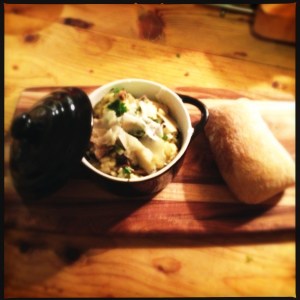
My Wild Mushroom, Chicken and Truffle Risotto

20 Dec

Risotto a brief history

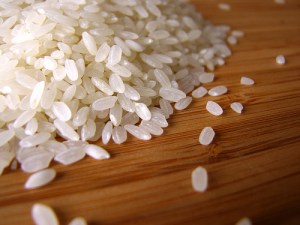
Arborio rice

Risotto comes from northern Italy; it is common in Piedmont and other northern Italian regions .This traditional Italian creamy rice dish is a versatile food that can be used as a main course or as a side dish to jazz up any meal. It can be made with so many different ingredients that the flavors are never the same twice.

photo-792496

The story of risotto began in the 14th century B.C., when the Arabs brought rice to Sicily and Spain during their rule. Italy was the ideal place to grow short-grain rice due to the humid weather and abundant flat land. As a result, rice became a main part of Italian food culture.

There is a lovely little story, urban legend perhaps, of a young apprentice called Valerius, who is supposed to have invented the yellow risotto recipe that Milan is so famous for.

The story goes that while he was working on the stain-glass window for the Cathedral Duomo in Milan in 1574 the towns’ people made fun of him, accrediting saffron to his work, instead of himself. He was incensed, and decided to take revenge. It came when his master got married. Valerius decided to overdose the rice with saffron which was going to be served as the main dish at the wedding feast. However, his retribution plans backfired as the guests were enthralled, and so the yellow risotto recipe of Milan became famous.

Afbeelding 003My risotto is made using a homemade stock, the freshest of wild mushrooms, organic chicken and to finish it off fresh black truffle.

Afbeelding 007

For more info mail or call: simon.bingham@simons-sauces.com 0642297107

Afbeelding 004

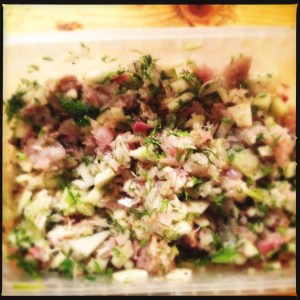
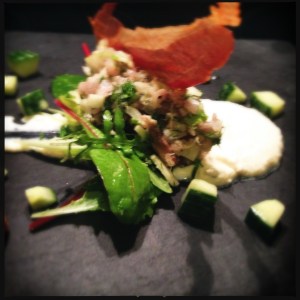
Recipe of the Day Mackerel Tartare with Prosciutto Crisps and Green Apple Vinaigrette.

16 Dec

This is my tribute to Keri Moss, one of the This winners of Mastercher the Professionals 2012. The recipe uses quail eggs but I forgot to buy some , anyway this dish still tastes fantastic full of subtle flavors , this is a real must to try. 

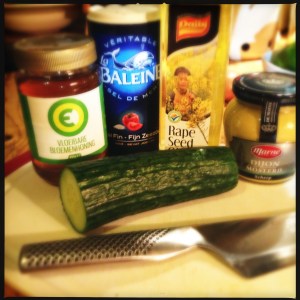
Ingredients:Afbeelding 002

For the marinated cucumber

1 tsp runny honey

20g/1oz rapeseed oil

1 tsp Dijon mustard

2g salt

½ cucumber, peeled, seeds removed, cut into batons

Afbeelding 017

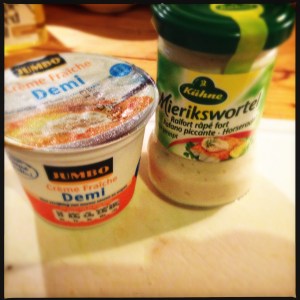
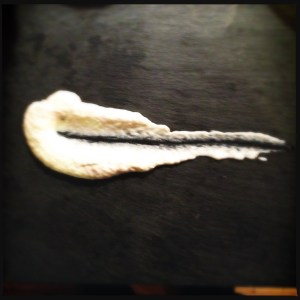
For the horseradish cream

100g/3½oz fresh horseradish, finely grated

70ml/2½fl oz soured cream

salt and freshly ground black pepperAfbeelding 011

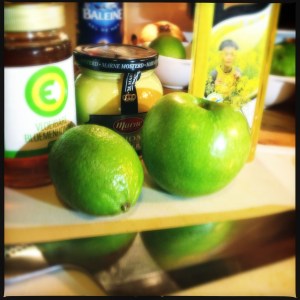
For the green apple vinaigrette

2 Granny Smith apples, freshly juiced

20ml/1fl oz lime juice

20g/1oz runny honey

10g/½oz Dijon mustard

100ml/3½fl oz pomace oil

Afbeelding 023

For the mackerel tartare

1 banana shallot, finely chopped

15ml/½fl oz pomace oil

1 Granny Smith apple, core removed, finely chopped

½ bunch dill

100g/3½oz smoked mackerel, skin removed, cut into 0.5cm/¼in dice

1 very fresh whole mackerel, gutted, filleted, pin boned and skin removed, diced

Afbeelding 007

For the prosciutto crisp

light olive oil or pomace oil

4 slices prosciutto

To serve

mixed baby salad leaves

Preparation method

Afbeelding 005

1.For the marinated cucumber, mix together the honey, rapeseed oil, Dijon mustard, and salt.

Afbeelding 006

2.Place the cucumber in a vacuum pack bag and pack very tightly. Then place in the fridge for a minimum of two hours.

3.Remove the cucumber from the bag and cut it into a 1cm/½in dice. Add it to the honey dressing and set aside until ready to serve.

4.For the horseradish cream, add the grated horseradish and the soured cream to a food processor and blend to a purée. Pass through a fine sieve, season with salt and pepper and set aside in the fridge until needed.

Afbeelding 015

5.For the green apple vinaigrette, mix the apple and lime juice, honey, Dijon mustard and pomace oil and whisk to combine. Season with salt and pepper, to taste. Then set aside until needed.

6.For the mackerel tartare, gently fry the shallot in the pomace oil until softened, without colouring.

7.Remove from the heat and mix in a bowl with the green apple and dill. Set aside in the fridge to cool.

Afbeelding 026

8.Mix the smoked and fresh mackerel with the cooled apple and shallot, season to taste with about 30ml/1½fl oz of the green apple vinaigrette and some salt and pepper. Set aside in the fridge until needed.

Afbeelding 031Afbeelding 008

10.For the prosciutto crisp, line a baking tray with parchment paper and brush with a little pomace oil.

11.Then place the prosciutto on the paper and finish with another sheet of parchment paper.Afbeelding 037

12.Place another baking tray on top and cook in the oven for 15-18 minutes or until crisp. Then remove from the tray and cool on a wire rack.

13.Preheat a deep fat fryer to 180C/350F.

14.For the crisp poached quails’ eggs, poach the quails’ eggs for 90 seconds. Remove from the water with a slotted spoon and set aside to drain on kitchen paper.

15.Place the flour and beaten egg into separate bowls. Stir together the parmesan and panko breadcrumbs in a third bowl. Dip the poached eggs into flour, egg, then breadcrumbs.

16.Deep-fry the breaded eggs for 2-3 minutes, or until golden and crisp. Remove with a slotted spoon and set aside to drain on kitchen paper. Season with salt and pepper.Afbeelding 038

17.To serve, dress each serving plate with a swipe of the horseradish cream. Add two quenelles of the mackerel tartare and a quails’ egg. Remove the cucumber from the marinade and spoon around the plate. Then add the prosciutto crisp.

Afbeelding 040

18.Dress the frisée in a little of the apple dressing. Garnish the plate with the frisée and mustard frills. Pour the remaining dressing in a jug and serve on the side.

Afbeelding 048

If you’re still not sure or a little nervous, I can make this dish for you.

Pomace oil is made from olives , I used olive oil as an alternativeAfbeelding 050

For more info , mail or call : simon-bingham@simons-sauces.com

0642291707

Afbeelding 043

Many thanks to Keri Moss masterchef  professional winner 2012 for this most fantastic dish.

Recipe of the day: Moules au Cidre, Mussels cooked in Cider

18 Nov

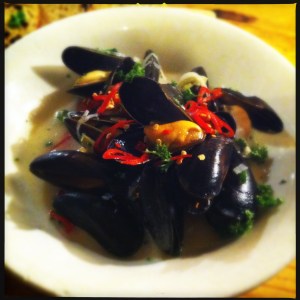
 Moules au Cidre, Mussels cooked in Cider  is my take on the French classic  moules marinieres ,using cider instead of wine and my magic little touch fennel.

Mussel tips and info

COOKING TIPS: Mussels are most often steamed open over a small amount of flavoured liquid, as in Moules marinière, although they can also be oven roasted and are particularly good cooked ‘en papillote’ (in a bag). Wine, stock, beer and cider are all great for cooking mussels, but take care not to add salt to the liquid as mussel juice can be very salty If a mussel is unopened after cooking , this indicates that it was already dead. You will probably notice the colour of the meat varies between beige and orange. This is an indication of sex – beige for male and orange for female; there is no difference in flavour.  A great way to eat is by pullingl the meat from one shell and then use that shell as a pincer to remove meat from the rest. Serve simply with crusty bread – lovely!

Buying the best

Mussels in the shell are sold either alive or pre-cooked. They’re available out of the shell as ‘mussel meat’, or brined or pickled in cans. For cooking, you really want live mussels in the shell. Farmed mussels are a particularly good buy as they are often more appealing to look at and require a lot less scrubbing under the tap to remove barnacles. Live mussels are often sold pre-weighed in a net bag, and should be kept cool on the way home.

Storing live mussels

Don’t leave them wrapped in a plastic bag (they can suffocate), or soaking in water, as chemicals and the lack of salinity (salt) can also kill them. Instead, keep them in a bowl, lightly covered with damp kitchen paper, in the bottom of the fridge – not too cold or they won’t last as long. They can then last up to five days – although you should expect to lose quite a few over this length of time, so it’s best to eat them on the day of purchase.

Ingredients,

Serves 4, or if you’re really greedy like me serves 2.

• olive oil

• Small knob butter

• 2kg mussels, de-bearded and scrubbed clean (ask your fishmonger to do this for you)

• 2 cloves of garlic, peeled and finely sliced

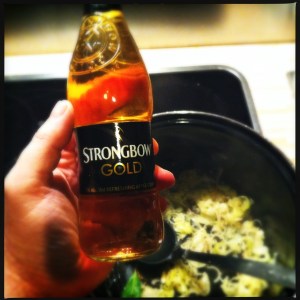
• 150ml good-quality cider

• 2 tablespoons crème fraîche

• 4 banana shallots, finely sliced

• 1 small fennel bulb , finely sliced

• 2 bay leaves

• a small bunch of fresh flat-leaf parsley, leaves picked and roughly chopped

• 1 chili finely sliced and de-seeded (this is optional don’t add if you don’t want )

method

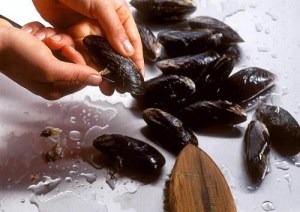
1. Raw mussels MUST be alive when you cook them, so careful preparation is key. Wash them under cold running water until it runs clear, and scrub if necessary. Pull the ‘beard’ away from each individual mussel – this is the byssus thread, a protein the mussel ‘spins’ so it can attach itself to rock or rope. Drain and then check; if the shell is tightly shut, this is a good indication that it’s alive. If the mussel is open, tap it sharply for a few seconds – if it is alive, it will close. Discard any that appear to be dead as they can decompose very rapidly, and eating one that you aren’t sure of is not worth the risk. Don’t check them too far in advance; cook within a few minutes to be on the safe side.

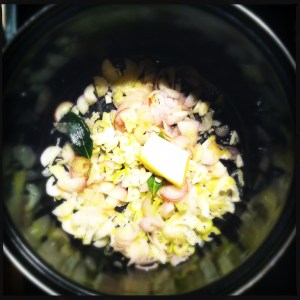
2. Heat the butter and oil in a pan large enough to easily fit the mussels, Throw in the shallots ,fennel, garlic bay leaves, then cook for 3-5 min`s until softened.

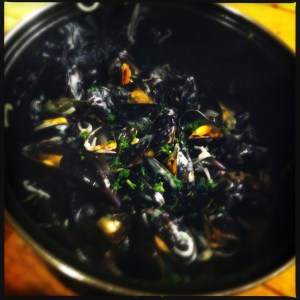
Whack the heat up to maximum pour in the cider and bring to the boil, then tip in the mussels and place a lid on the pan.give it a good shake, then cook the mussels for 3-5 min`s, shaking the pan occasionally, until all the mussels have opened. Discard any that haven’t.

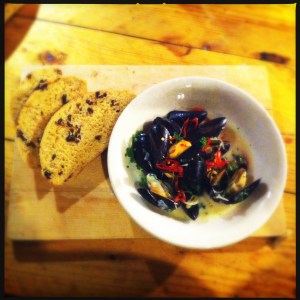
3. stir in the crème fraîche, add the chili (if desired) and  scatter the parsley all over. scoop the mussels into bowls. Serve with hunks of my crusty parmesan and sun-dried tomato bread for mopping up the sauce.


Still not sure or scared about cooking mussels, I could come and cook them for you and your family.


For info mail or phone: simon.bingham@simons-sauces.com 0642297107

The Humble Potato; and my wonderful Roasted Potatoes

7 Nov

The humble potato

The Potato is one of the staple foods of modern Western Civilization. It can be classified as both a starch and a vegetable. From its roots in the Andes Mountains to its domination of the farms of Idaho, the potato has been both a sustaining force and a culinary delight. The potato continues to grow in popularity, especially on the Asian continent.

In the ancient ruins of Peru and Chile, archaeologists have found potato remains that date back to 500 B.C. The Incas grew and ate them and also worshipped them. They even buried potatoes with their dead, they stashed potatoes in concealed bins for use in case of war or famine, they dried them, and carried them on long journeys to eat on the way (dried or soaked in stew). Ancient Inca potatoes had dark purplish skins and yellow flesh. The Incas called the potato “papas,” as they do today

Western man did not come in contact with the potato until as late as 1537 when the Conquistadors tramped through Peru. And it was even later, about 1570, that the first potato made its way across the Atlantic to make a start on the continent of Europe.

Though the tuber was productive and hardy, the Spanish put it to very limited use. In the Spanish Colonies potatoes were considered food for the underclasses; when brought to the Old World they would be used primarily to feed hospital inmates.
Europe would wait until the 1780’s before the potato gained prominence anywhere. About 1780 the people of Ireland adopted the rugged food crop. The primary reason for its acceptance in Ireland was its ability to produce abundant, nutritious food. Unlike any other major crop, potatoes contain most of the vitamins needed for sustenance.

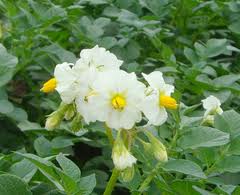
When potato plants bloom, they send up five-lobed flowers that spangle fields like fat purple stars. By some accounts, Marie Antoinette liked the blossoms so much that she put them in her hair. Her husband, Louis XVI, put one in his buttonhole, inspiring a brief vogue in which the French aristocracy swanned around with potato plants on their clothes. The flowers were part of an attempt to persuade French farmers to plant and French diners to eat this strange new species.

The Irish Potato Famine:  The “Great Famine” or also called the “Great Starvation” in Ireland was caused because the potato crop became diseased. At the height of the famine (around 1845), at least one million people died of starvation. This famine left many poverty stricken families with no choice but to struggle for survival or emigrate out of Ireland. Towns became deserted, and all the best shops closed because store owners were forced to emigrate due to the amount of unemployment. Over one and a half million people left Ireland for North America and Australia. Over just a few years, the population of Ireland dropped by one half, from about 9 million to little more than 4 million.

Today, the potato is so common and plentiful in the Western diet that it is taken for granted. We seem to forget that the potato has only been with us for a few hundred years.

Are potatoes nutritious? Indeed! Potatoes are low in fat and calories and high in vitamin B6, C and potassium. If you serve them in the skin, they are also a good source of dietary fiber. It’s best to store potatoes in a cool dark place. Take them out of any packaging so they don’t sweat or start sprouting and if they do have the odd sprout, or green patch (this can be piousness), make sure you cut those bits out before cooking them.
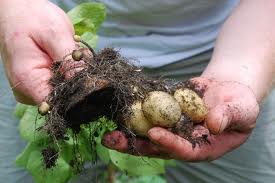
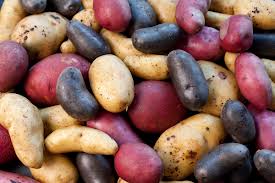
Potato varieties
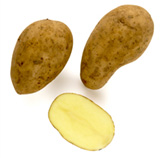
Bintje

An Old Dutch variety, Bintje is the most popular yellow-fleshed potato variety. Small to medium sized tubers long oval shaped with pale cream/yellow skin flecked with brown spots. Cream/white flesh, firm texture, low sugar.

A Good cooking and processing potato: commonly used for chips and fries, also great in potato salads

Available all year, and having a Long shelf life providing they are kept in the dark

Nicola

Small to medium sized tuber, long oval shaped with light brown/yellow rough skin with large, light brown spots, creamy yellow flesh with a firm texture after cooking, buttery flavor, excellent for cooking, especially boiling , mashing ,salads and also great for home-made gnocchi, available all year

Desiree

Large, oval shaped tuber with pink/red skin and dark spots creamy yellow flesh with firm texture .Good for boiling, mashing and frying; does not discolor after cooking and available all year
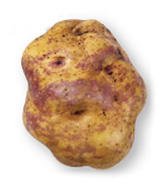
Pink Eye

This variety has a creamy yellow flesh that tends to be waxy with a nutty flavor. Best for salads, boiling, steaming and baking.
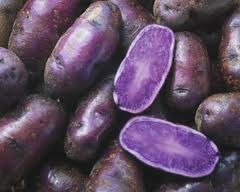
 

Purple Congo

Also called Congo, Blue Congo and a host of other names, irregular long oval shaped tuber with very distinctive dark purple colour ,Dark purple flesh with light purple flecks, great for baking, good for boiling and mashing , has a Long storage life, available all year
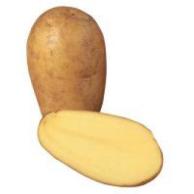
Charlotte

Charlotte is a small, deep yellow fleshed potato with a firm texture and is often used in salads. Great for roasting, boiling, steaming or sautéing, they’re also good eaten hot or cold.

Now for my Perfect Roasted Potatoes

Ingredients

200g/ goose or duck fat , this give such an amazing flavor (if not available use olive or rapeseed oil)

50g/ salt

500g/ Bintje/ Nicola potatoes, cut into 6 pieces

Salt and freshly ground pepper to taste

4 sprigs thyme

2 sprigs rosemary

4 garlic cloves, unpeeled

Preparation method

1. Preheat the oven to 200C/400F/Gas 6.

2. Place the goose fat in a medium sized heavy based roasting tray and place in the oven. It is essential that you preheat the fat in the oven as the potatoes will instantly start crisping and cooking when placed in the oven. The hot fat will give a wonderful crust to the potatoes and a rich golden colour.

3. In a medium saucepan on a high heat, bring two litres of water and the salt to a boil. This may seem like a lot of salt, but you want the water to season the potatoes at this early stage.

4. Carefully add the potatoes to the water and boil over a high heat for 7-8 minutes or until the outside of the potatoes starts to flake. By boiling the potatoes fiercely you ensure that you only cook the outside surface, allowing them to be fluffed up. The easiest way to check that they have been boiled enough is to push the tip of a sharp knife in to them; the tip should only go in 5mm.

5. Drain the potatoes in a colander and allow to stand for two minutes. Shake the colander gently for one minute or until the outside of the potato pieces are ruffled and slightly fluffy, creating hundreds of little nooks and ridges that will crisp when placed in the hot fat, Season with salt and freshly ground black pepper.

6. Carefully take the roasting tray with goose fat out of the oven and using a spoon with a long handle or a pair of tongs, place the potatoes in to the hot fat , add the thyme, rosemary and garlic. Shake the tray to ensure that the potatoes are in an even layer.

7. Roast in the oven for 40 minutes, turning the potatoes over half way through.

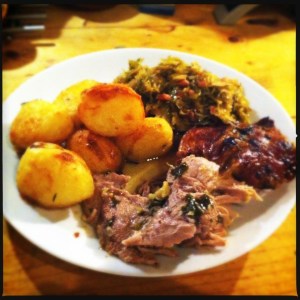
8. Scoop the potatoes into a warm serving dish and serve alongside dish of your choice , I like to serve mine with a delicious garlic, rosemary and anchovy encrusted  roast shoulder of lamb.

Thai food history, and of course my Thai Curry

3 Nov

Until 1939, the country we call Thailand was known as Siam. It was the only Southeast Asian country never colonized by the West. This helped Thailand to maintain its own special cuisine (cooking style). However, that cuisine had already been influenced by Thailand’s Asian neighbors. Outside influences such as Chinese cooking methods, IE, the introduction of frying, be it stir frying or deep frying have become what is now probably Thailand’s favorite cooking method, especially stir frying and the use of the Wok.
From nearby India came not only the Buddhist religion, but also spicy seasonings such as cumin, cardamom, and coriander, as well as curry dishes. The Malays, to the south, further shared seasonings, as well as their love of coconuts and the satay.

From the 16th and 17th centuries onward, when the powerful European trading nations began establishing their trading routes between Europe and South East Asia the Thais were ideally placed to benefit from the introduction of some more ingredients which would contribute further to the development and history of Thai food. One such introduction is one which we would be forgiven for thinking as a very Thai commodity, “The Chili ” was actually introduced by Portuguese Missionaries who brought them over from South America in the 1600’s.

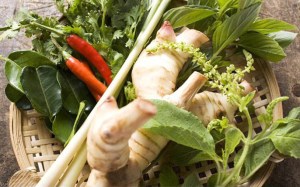
Overpowering pure spices were toned down and enhanced by fresh herbs such as lemon grass and galangal. Eventually, fewer and less spices were used in Thai curries, while the use of fresh herbs increased. It is generally acknowledged that Thai curries burn intensely, but briefly, whereas other curries, with strong spices, burn for longer periods. A typical Thai meal includes four main seasonings: salty, sweet, sour, and spicy, most Thai dishes are not considered satisfying unless they combine all four tastes. Instead of serving dishes in courses, a Thai meal is served all at once, permitting diners to enjoy complementary combinations of different tasters.

A proper Thai meal should consist of a soup, a curry dish with condiments, a dip with accompanying fish and vegetables. A spiced salad may replace the curry dish. The soup can also be spicy, but the curry should be replaced by a non-spiced item. There must be harmony of tastes and textures within individual dishes and the entire meal.

Green curry and red curry are easily the most popular curries, utilizing chili peppers, garlic, lemon grass, and coconut milk, among other essential herbs and spices. Green curry is made with fresh, young green chili’s, and is significantly hotter than other curries.

 Red curry is made with bigger red chili’s, which are not as hot as their green counterpart, but still packing significant heat. Green curry tends to lean toward a sweeter flavor, while red explores the savory side.

Yellow curry is highly aromatic and brightly colored due to roasted spices and an infusion of turmeric, and is typically paired with fish or poultry. The curry has a rich, bold taste, sweet with subtle hints of spices, and is effectively hot without being overpowering. Yellow curry hails from southern Thailand and is usually made with the addition of yellow peppers.

Masaman curry is by far the sweetest of all the curries, and is an excellent pairing with shrimp or chicken. A rich authentic flavor, usually with hints of tangy tamarind, this mildly hot curry is actually Indian-influenced, and is a popular favorite. A good introduction to curry if you are worried about trying something overly hot.

Panang Curry shares many of the same ingredients and is very similar in flavor to Red Curry, but for a slightly sweeter taste, and is slightly less fiery on the tongue. It is extremely flavorful when made with vegetarian dishes or stir-fries

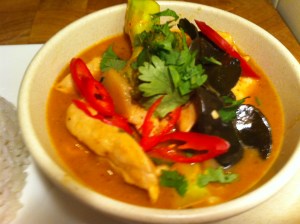
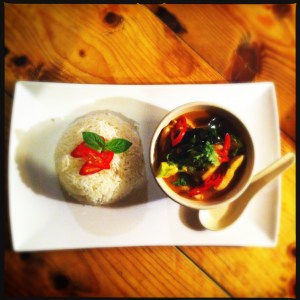
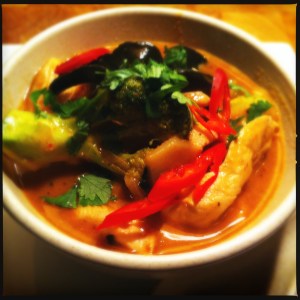
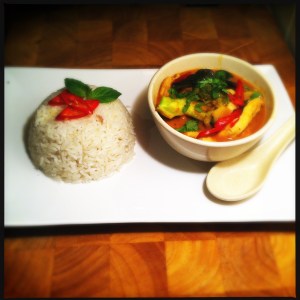
My authentic red curry is made using chicken and the freshest of herbs, but for something more luxurious try it with “Tiger Prawns”,

 For info, ordering and pricing mail; simon.bingham@simons-sauces.com or call 0642297107