Archive | Recipe of the day RSS feed for this section

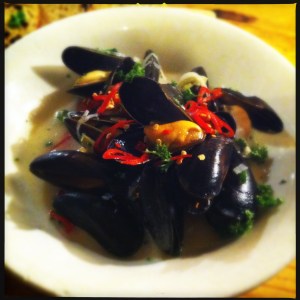
Recipe of the day: Moules au Cidre, Mussels cooked in Cider

18 Nov

 Moules au Cidre, Mussels cooked in Cider  is my take on the French classic  moules marinieres ,using cider instead of wine and my magic little touch fennel.

Mussel tips and info

COOKING TIPS: Mussels are most often steamed open over a small amount of flavoured liquid, as in Moules marinière, although they can also be oven roasted and are particularly good cooked ‘en papillote’ (in a bag). Wine, stock, beer and cider are all great for cooking mussels, but take care not to add salt to the liquid as mussel juice can be very salty If a mussel is unopened after cooking , this indicates that it was already dead. You will probably notice the colour of the meat varies between beige and orange. This is an indication of sex – beige for male and orange for female; there is no difference in flavour.  A great way to eat is by pullingl the meat from one shell and then use that shell as a pincer to remove meat from the rest. Serve simply with crusty bread – lovely!

Buying the best

Mussels in the shell are sold either alive or pre-cooked. They’re available out of the shell as ‘mussel meat’, or brined or pickled in cans. For cooking, you really want live mussels in the shell. Farmed mussels are a particularly good buy as they are often more appealing to look at and require a lot less scrubbing under the tap to remove barnacles. Live mussels are often sold pre-weighed in a net bag, and should be kept cool on the way home.

Storing live mussels

Don’t leave them wrapped in a plastic bag (they can suffocate), or soaking in water, as chemicals and the lack of salinity (salt) can also kill them. Instead, keep them in a bowl, lightly covered with damp kitchen paper, in the bottom of the fridge – not too cold or they won’t last as long. They can then last up to five days – although you should expect to lose quite a few over this length of time, so it’s best to eat them on the day of purchase.

Ingredients,

Serves 4, or if you’re really greedy like me serves 2.

• olive oil

• Small knob butter

• 2kg mussels, de-bearded and scrubbed clean (ask your fishmonger to do this for you)

• 2 cloves of garlic, peeled and finely sliced

• 150ml good-quality cider

• 2 tablespoons crème fraîche

• 4 banana shallots, finely sliced

• 1 small fennel bulb , finely sliced

• 2 bay leaves

• a small bunch of fresh flat-leaf parsley, leaves picked and roughly chopped

• 1 chili finely sliced and de-seeded (this is optional don’t add if you don’t want )
method

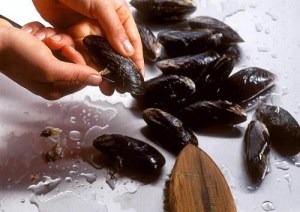
1. Raw mussels MUST be alive when you cook them, so careful preparation is key. Wash them under cold running water until it runs clear, and scrub if necessary. Pull the ‘beard’ away from each individual mussel – this is the byssus thread, a protein the mussel ‘spins’ so it can attach itself to rock or rope. Drain and then check; if the shell is tightly shut, this is a good indication that it’s alive. If the mussel is open, tap it sharply for a few seconds – if it is alive, it will close. Discard any that appear to be dead as they can decompose very rapidly, and eating one that you aren’t sure of is not worth the risk. Don’t check them too far in advance; cook within a few minutes to be on the safe side.
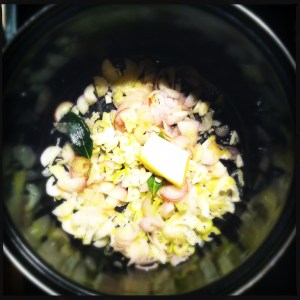
2. Heat the butter and oil in a pan large enough to easily fit the mussels, Throw in the shallots ,fennel, garlic bay leaves, then cook for 3-5 min`s until softened.
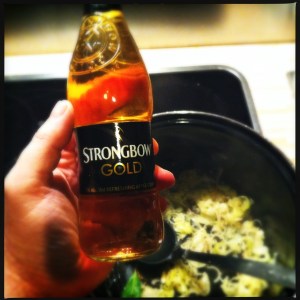
Whack the heat up to maximum pour in the cider and bring to the boil, then tip in the mussels and place a lid on the pan.give it a good shake, then cook the mussels for 3-5 min`s, shaking the pan occasionally, until all the mussels have opened. Discard any that haven’t.
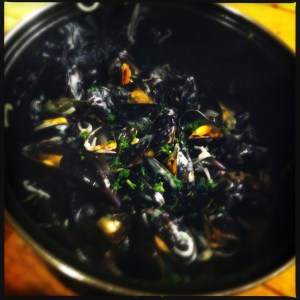
3. stir in the crème fraîche, add the chili (if desired) and  scatter the parsley all over. scoop the mussels into bowls. Serve with hunks of my crusty parmesan and sun-dried tomato bread for mopping up the sauce.
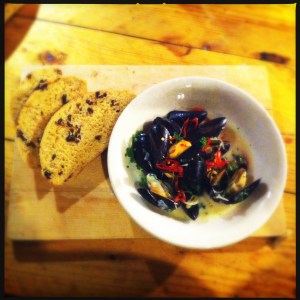


Still not sure or scared about cooking mussels, I could come and cook them for you and your family.


For info mail or phone: simon.bingham@simons-sauces.com 0642297107
The Humble Potato; and my wonderful Roasted Potatoes

7 Nov

The humble potato

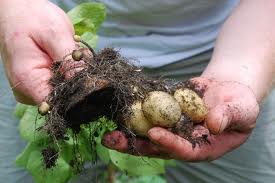
The Potato is one of the staple foods of modern Western Civilization. It can be classified as both a starch and a vegetable. From its roots in the Andes Mountains to its domination of the farms of Idaho, the potato has been both a sustaining force and a culinary delight. The potato continues to grow in popularity, especially on the Asian continent.

In the ancient ruins of Peru and Chile, archaeologists have found potato remains that date back to 500 B.C. The Incas grew and ate them and also worshipped them. They even buried potatoes with their dead, they stashed potatoes in concealed bins for use in case of war or famine, they dried them, and carried them on long journeys to eat on the way (dried or soaked in stew). Ancient Inca potatoes had dark purplish skins and yellow flesh. The Incas called the potato “papas,” as they do today

Western man did not come in contact with the potato until as late as 1537 when the Conquistadors tramped through Peru. And it was even later, about 1570, that the first potato made its way across the Atlantic to make a start on the continent of Europe.

Though the tuber was productive and hardy, the Spanish put it to very limited use. In the Spanish Colonies potatoes were considered food for the underclasses; when brought to the Old World they would be used primarily to feed hospital inmates.

Europe would wait until the 1780’s before the potato gained prominence anywhere. About 1780 the people of Ireland adopted the rugged food crop. The primary reason for its acceptance in Ireland was its ability to produce abundant, nutritious food. Unlike any other major crop, potatoes contain most of the vitamins needed for sustenance.

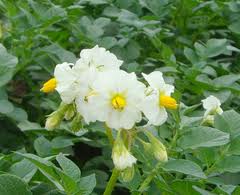
When potato plants bloom, they send up five-lobed flowers that spangle fields like fat purple stars. By some accounts, Marie Antoinette liked the blossoms so much that she put them in her hair. Her husband, Louis XVI, put one in his buttonhole, inspiring a brief vogue in which the French aristocracy swanned around with potato plants on their clothes. The flowers were part of an attempt to persuade French farmers to plant and French diners to eat this strange new species.

The Irish Potato Famine:  The “Great Famine” or also called the “Great Starvation” in Ireland was caused because the potato crop became diseased. At the height of the famine (around 1845), at least one million people died of starvation. This famine left many poverty stricken families with no choice but to struggle for survival or emigrate out of Ireland. Towns became deserted, and all the best shops closed because store owners were forced to emigrate due to the amount of unemployment. Over one and a half million people left Ireland for North America and Australia. Over just a few years, the population of Ireland dropped by one half, from about 9 million to little more than 4 million.

Today, the potato is so common and plentiful in the Western diet that it is taken for granted. We seem to forget that the potato has only been with us for a few hundred years.

Are potatoes nutritious? Indeed! Potatoes are low in fat and calories and high in vitamin B6, C and potassium. If you serve them in the skin, they are also a good source of dietary fiber. It’s best to store potatoes in a cool dark place. Take them out of any packaging so they don’t sweat or start sprouting and if they do have the odd sprout, or green patch (this can be piousness), make sure you cut those bits out before cooking them.

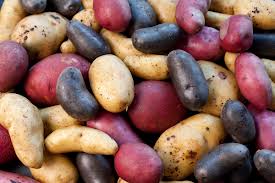
Potato varieties

Bintje

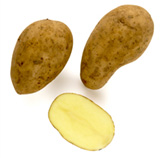
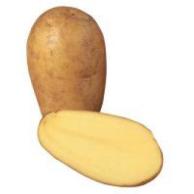
An Old Dutch variety, Bintje is the most popular yellow-fleshed potato variety. Small to medium sized tubers long oval shaped with pale cream/yellow skin flecked with brown spots. Cream/white flesh, firm texture, low sugar.

A Good cooking and processing potato: commonly used for chips and fries, also great in potato salads

Available all year, and having a Long shelf life providing they are kept in the dark

Nicola

Small to medium sized tuber, long oval shaped with light brown/yellow rough skin with large, light brown spots, creamy yellow flesh with a firm texture after cooking, buttery flavor, excellent for cooking, especially boiling , mashing ,salads and also great for home-made gnocchi, available all year

Desiree

Large, oval shaped tuber with pink/red skin and dark spots creamy yellow flesh with firm texture .Good for boiling, mashing and frying; does not discolor after cooking and available all year

Pink Eye

This variety has a creamy yellow flesh that tends to be waxy with a nutty flavor. Best for salads, boiling, steaming and baking.


Purple Congo

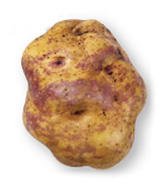
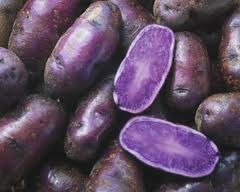
Also called Congo, Blue Congo and a host of other names, irregular long oval shaped tuber with very distinctive dark purple colour ,Dark purple flesh with light purple flecks, great for baking, good for boiling and mashing , has a Long storage life, available all year

Charlotte

Charlotte is a small, deep yellow fleshed potato with a firm texture and is often used in salads. Great for roasting, boiling, steaming or sautéing, they’re also good eaten hot or cold.

Now for my Perfect Roasted Potatoes

Ingredients

200g/ goose or duck fat , this give such an amazing flavor (if not available use olive or rapeseed oil)

50g/ salt

500g/ Bintje/ Nicola potatoes, cut into 6 pieces

Salt and freshly ground pepper to taste

4 sprigs thyme

2 sprigs rosemary

4 garlic cloves, unpeeled

Preparation method

1. Preheat the oven to 200C/400F/Gas 6.

2. Place the goose fat in a medium sized heavy based roasting tray and place in the oven. It is essential that you preheat the fat in the oven as the potatoes will instantly start crisping and cooking when placed in the oven. The hot fat will give a wonderful crust to the potatoes and a rich golden colour.

3. In a medium saucepan on a high heat, bring two litres of water and the salt to a boil. This may seem like a lot of salt, but you want the water to season the potatoes at this early stage.

4. Carefully add the potatoes to the water and boil over a high heat for 7-8 minutes or until the outside of the potatoes starts to flake. By boiling the potatoes fiercely you ensure that you only cook the outside surface, allowing them to be fluffed up. The easiest way to check that they have been boiled enough is to push the tip of a sharp knife in to them; the tip should only go in 5mm.

5. Drain the potatoes in a colander and allow to stand for two minutes. Shake the colander gently for one minute or until the outside of the potato pieces are ruffled and slightly fluffy, creating hundreds of little nooks and ridges that will crisp when placed in the hot fat, Season with salt and freshly ground black pepper.

6. Carefully take the roasting tray with goose fat out of the oven and using a spoon with a long handle or a pair of tongs, place the potatoes in to the hot fat , add the thyme, rosemary and garlic. Shake the tray to ensure that the potatoes are in an even layer.

7. Roast in the oven for 40 minutes, turning the potatoes over half way through.

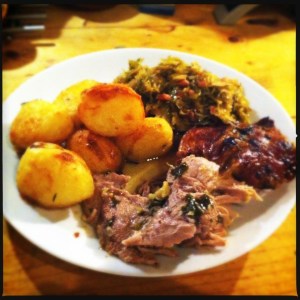
8. Scoop the potatoes into a warm serving dish and serve alongside dish of your choice , I like to serve mine with a delicious garlic, rosemary and anchovy encrusted  roast shoulder of lamb.

Slow Roasted Pork Belly with my Spiced Beetroot Chutney

20 Oct

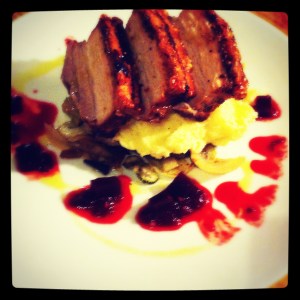
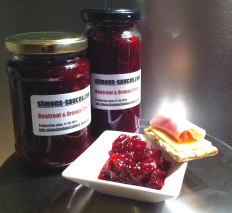
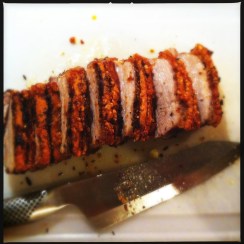
Wondering how to use my beetroot chutney? Well tonight I made a delicious slow roasted pork belly with crunchy crackling, on a bed of garlic mashed potatoes and caramelized fennel & onions. The sweet sour flavor of the chutney compliments this rich tender meat and brings another texture to the dish.


For info ( I’ll post the recipe later this week ) and pricing mail or call; simon.bingham@simons-sauces.com 0642297107
Recipe of the day: Pork meatballs in my Chargrilled Paprika Sauce

9 Oct

Ingredients: serves 4

450g pork mince

1 small apple , peeled, cored and grated

1 small garlic clove , crushed

25g fresh white breadcrumbs

1 tbsp olive oil

250g pasta of choice , to serve

1 jar of my Chargrilled Paprika Sauce

50g feta cheese

Method

1.Put the pork mince in a bowl and stir in the apple, garlic, breadcrumbs and some salt and pepper. Shape the mixture into 16 balls, cover and chill for 10 mins.

2.Heat the oil in a large non-stick frying pan and add the meatballs. Cook for 5-6 mins, stirring occasionally until they are browned all over.

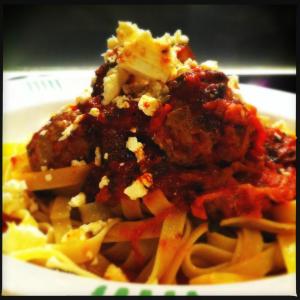
3. Carefully add the sauce to the meatballs and simmer for 15 mins, until cooked through. Meanwhile, cook the pasta following pack instructions, drain, then divide between serving plates. Top with the meatballs and sauce and crumble the feta cheese allover.

Recipe of the day: Roasted cod wrapped in Parma ham with Sun-Blush Tomatoes

1 Oct

Ingredients

  • 150g of my SuBlushTomatoes
  • 30g fresh basil
  • 75ml oil from the sun-blush tomatos, plus extra for oiling
  • 8 slices Parma ham
  • 4 cod fillets
  • salt and freshly ground black pepper.

Preparation method

Preheat the oven to 180C/350F/Gas 4. Place the sun-dried tomatoes and basil into a blender or food processor and blend to a paste. Gradually drizzle in the Sun-blush oil to slacken the paste.

  1. Cut out four squares of greaseproof paper, approximately 25cm/10in x 25cm/10in in size, and lay two slices of ham on each piece of paper to overlap.
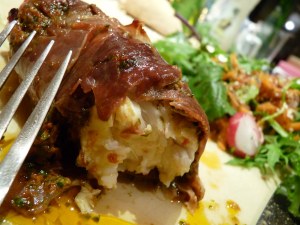
  2. Spread the sun-dried tomato paste over the Parma ham slices and lay a cod fillet on top of each pair. Roll up the paper around each fillet to make a cigar-shaped parcel and carefully remove the paper from each piece of wrapped cod.
  3. Place the parcels onto a lightly oiled baking tray. Roast for 15-20 minutes until cooked all the way through. Serve at once with a delicious watercress salad , boiled buttered new potatoes or fragrant rice,

For info and pricing about my Sun-Blush Tomatoes , call or mail @ 0642297107 simon.bingham@hotmail.com

Recipe of the day:Salmon with lemon pesto crust

24 Sep

Create a special salmon dish out of just four ingredients , Serves 2

Ingredients & method

2 skinless salmon fillets

a handful of white breadcrumbs , mixed with a little lemon zest and 2 tbsp of my homemade pesto

lemon wedges, to serve

200g broccoli , steamed for 4 minutes and dressed with a little olive oil and lemon juice to serve

.Heat the oven to 220C/fan 200C/gas 7. Press the breadcrumb mix all over the top of the salmon fillets.

 Bake for 10-12 minutes until the crust is turning golden and the salmon is just cooked.

 Serve with the broccoli and lemon wedges.

Mail or phone or info and pricing of the Homemade pesto

Sun-Blush Tomato, Feta and Basil Bruschetta

12 Sep

Sun-Blush Tomato, Feta and Basil Bruschetta


A crusty slice of baguette or chibatta topped with a pungent and robust homemade Sun-blush Tomatotapenade. Such simple ingredients melting together to make one mouthwatering bite.

Sun-Blush Tomato Tapenade – 

  • 250gr  sun-blush tomatoes
  • 3 tablespoons finely chopped red bell pepper
  • 5 cloves garlic, finely chopped
  • 170gr feta cheese
  • 2 tablespoons dried basil (or 6 tablespoons fresh)
  • 1/2 teaspoon pepper
  • 2 teaspoons balsamic vinegar
  1. Remove the tomatoes from oil (reserving 150ml oil) and chop finely.
  2. Stir together tomatoes, 150ml reserved oil, red pepper, and garlic. Crumble feta over top and add remaining ingredients. Stir to combine.
  3. Cover and refrigerate at least 4 hours before serving. Can be made a couple of days in advance. Stir before using.

Makes enough for 60cm baguette or chibatta

Sun-dried Tomato, Feta and Basil Bruschetta

  • 1-60cm baguette or chibatta
  • olive oil, to drizzle
  • sun-blush tapenade
  1. sun-dried tomato tapenade
  2. Slice the baguette/chibatta into 1 inch pieces at a diagonal. Brush or drizzle lightly with olive oil. Top with tapenade.
  3. Bake at 170ºc for 6 minutes. Serve immediately.

Serves: 4

Recipe of the day: Spinach and Homemade Sun-Blush Tomato Pasta

11 Sep

A simple Sicilian-style pasta dish using my sun-blush tomatoes.

Ingredients

  • 12 sun-blush tomatoes
  • 224 g uncooked penne pasta
  • 15 g pine nuts
  • 15 ml leftover  oil from the sun-blush tomatoes
  • 0.8 g crushed chilli flakes
  • 1 clove garlic, minced
  • 1 bunch fresh spinach, rinsed and torn into bite-size pieces
  • 20 g grated Parmesan cheese

Directions

  1. Bring a large pot of lightly salted water to a boil. Place penne pasta in the pot, cook 9 to 12 minutes, until al dente, and drain.
  2. Place the pine nuts in a skillet over medium heat. Cook and stir until lightly toasted.
  3. Heat the leftover sun-blush oil and chili flakes in a pan over medium heat and sauté the garlic 1 minute, until tender. Mix in the spinach, and cook until almost wilted. Pour in the reserved broth, and stir in the chopped sun-dried tomatoes. Continue cooking 2 minutes, or until heated through.
  4. In a large bowl, toss the cooked pasta with the spinach and tomato mixture and pine nuts. Serve with freshParmesan cheese.

Recipe of the day

5 Sep

Pesto Stuffed Chicken Wrapped In Prosciutto With Pesto Cream Image

This is a great use  for my homemade  pesto. The pesto helps keep the chicken breast tender and moist. This dish is an easy and impressive main course for a dinner party , or just a night in with the family.

Serves 4

Ingredients

My homemade pesto (call or mail for pricing and info)

4 chicken skinless breasts

18 slices prosciutto

2.5 tablespoons Dijon mustard

pepper

150 ml cream

pine nuts to garnish

Method

1. Preheat the oven to 190c. Lay and overlap 3 slices of prosciutto on a clean work surface.

2. Place a chicken breast on one end of the prosciutto square. Using a sharp knife create a pocket in the side of the chicken breast. Spoon some of the pesto into the slit.

3. Spoon some of the dijon mustard on the top of the chicken breast and spread it evenly. Sprinkle black pepper on top of the dijon mustard.

4. Wrap the prosciutto around the chicken breast. Place the chicken breast on a baking sheet, seam side down. Repeat for remaining chicken breasts.

5. Bake chicken breasts until they are cooked through and golden brown; about 20 minutes. Let the chicken rest for 5 minutes before serving.

6. Combine the chicken pan juices and 2 tablespoons of the pesto in a saucepan over medium heat. Cook for 1 minute.

7. Add the cream and bring the sauce to boil. Reduce the heat and let the sauce simmer. Cook until the sauce is reduced by half. Add salt and pepper to taste.

8. To serve the chicken, slice each breast into 2cm medallions. Transfer to a plate and top with the pesto cream sauce. Sprinkle the top with pine nuts